Today’s homes ask more from their electrical systems than many older properties were designed to provide. High-efficiency HVAC equipment, induction cooking, home offices, pool equipment, smart devices and electric vehicles can add significant demand. The electrical panel is the central distribution point, and its condition and capacity matter.
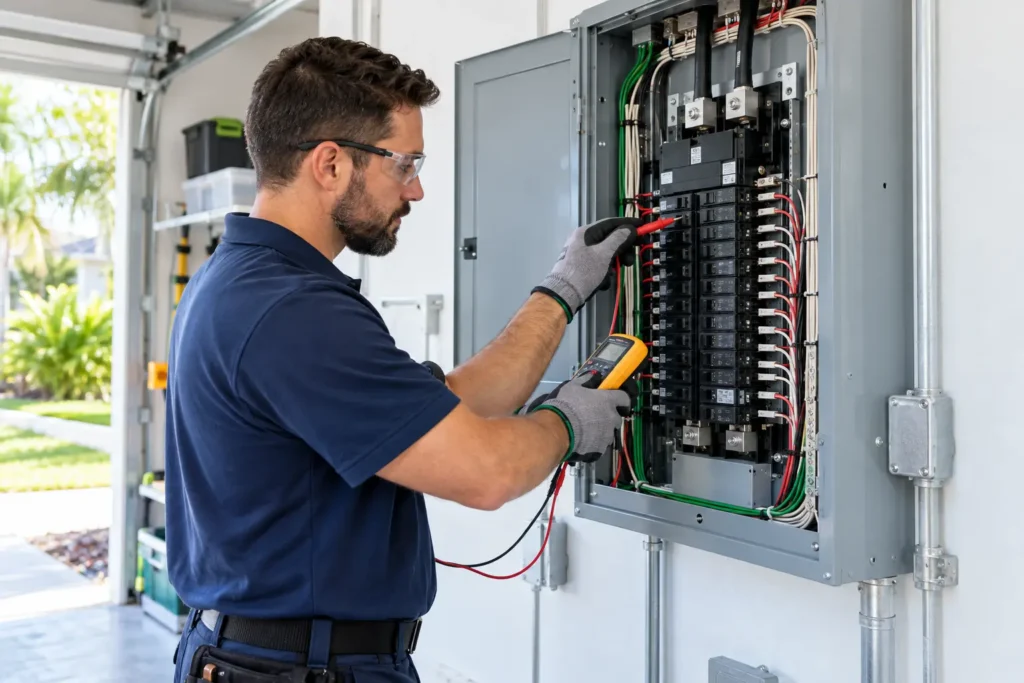
A professional load and condition assessment helps determine whether a panel upgrade is appropriate for your home.
What an Electrical Panel Actually Does
The panel receives power from the utility service and distributes it through protected branch circuits. Breakers are designed to interrupt current when certain unsafe conditions occur. A panel upgrade may involve replacing aging equipment, increasing service capacity, correcting deficiencies or preparing the property for new loads.
It is not a cosmetic project. Evaluation, design, permitting and installation should be handled by a licensed electrical contractor.
Frequent Breaker Trips
A breaker that trips occasionally because too many devices are used on one circuit is different from repeated or unexplained tripping. Recurring trips can indicate an overloaded circuit, equipment fault, wiring problem or another condition that needs diagnosis.
Never hold a breaker on, replace it with a larger size without proper engineering or ignore signs of heat. The breaker must match the circuit conductors and design.
Not Enough Space for New Circuits
Major additions such as an EV charger, central air-conditioning equipment, pool system, water heater or renovated kitchen may require dedicated circuits. If the panel has no suitable space, a licensed electrician must evaluate available capacity and the best code-compliant path forward.
Open spaces alone do not prove the service can support a new load. A load calculation considers the property and connected equipment.
Heat, Odors, Buzzing or Visible Damage
Warmth beyond normal operating conditions, burning odors, buzzing, corrosion, discoloration or damage around the panel should be taken seriously. Avoid removing covers or touching internal components. Contact a licensed electrician promptly, and use emergency services if the situation appears active or dangerous.
Older Equipment or an Unknown Installation History
Age alone does not automatically require replacement, but older equipment deserves a careful condition assessment. Previous modifications, corrosion, obsolete components and poor workmanship can affect reliability and safety.
Florida humidity, coastal exposure in some service areas and storm-related conditions can also influence electrical equipment over time.
Planning an EV Charger or Major Renovation
A Level 2 EV charger can represent a meaningful continuous electrical load. Kitchen remodeling, additions and HVAC replacement may also change demand. Evaluating the panel early helps the project team understand whether the existing service is adequate or an upgrade should be included.
For EV projects, OM Power Services can coordinate charger selection, capacity assessment, permitting and professional installation.
What Happens During a Panel Evaluation?
A licensed electrician may review the panel type, condition, breaker compatibility, service rating, available spaces, grounding and bonding, visible wiring conditions and the loads the home must serve. The exact scope depends on the property and planned project.
If an upgrade is recommended, the work may require utility coordination, permits and inspections. A professional proposal should explain what is included instead of treating every home as identical.
Benefits of a Properly Planned Upgrade
A new panel can provide appropriate capacity for current and planned equipment, improve organization, replace damaged or obsolete components and support code-compliant circuits. It does not reduce electricity use by itself, but it can create the foundation for safer, more reliable distribution.
OM Power Services provides residential and commercial electrical services, including panel upgrades, circuit installation, lighting, inspections, troubleshooting and emergency repair throughout Florida.
Other Improvements to Consider During Planning
A panel project is a useful time to discuss surge protection, grounding and bonding, labeling and capacity for planned equipment. Florida properties can be exposed to utility events and storm-related voltage disturbances. Surge protection is not a guarantee against every event, but a layered protection strategy may reduce exposure for connected equipment.
Clear circuit directories also matter. Accurate labeling helps homeowners and service professionals identify circuits quickly instead of guessing during maintenance or an emergency.
What Determines the Scope and Cost?
Panel size is only one factor. Existing service conductors, meter equipment, utility requirements, grounding, panel location, circuit condition, permitting and the amount of corrective work can all affect scope. Two houses with similar square footage may require different solutions.
A responsible estimate follows an evaluation. Be cautious of proposals that promise a universal price without reviewing the current equipment and intended loads.
How to Prepare for an Electrical Assessment
Make a list of planned changes such as a new HVAC system, EV charger, pool equipment, addition, kitchen renovation or workshop. Note any recurring breaker trips, flickering, odors, warm devices or previous electrical work. If you have records from earlier renovations, make them available.
Keep the panel area clear enough for safe access. Do not remove the cover yourself. The electrician will determine what needs to be opened and tested.
Why Licensed, Insured Installation Matters
Electrical service equipment is not a suitable do-it-yourself project. Errors can affect the entire property, create fire and shock risks, and complicate inspections or future work. Licensed contractors understand load calculations, conductor sizing, overcurrent protection, grounding, permitting and coordination with the utility when required.
OM Power Services holds Florida Electrical License EC-13010908 and provides documented, code-conscious electrical work for homes and commercial properties.
Common Panel Upgrade Misconceptions
A new panel does not automatically increase utility service capacity. The panel, meter, service conductors and utility connection must be evaluated as one system. Likewise, adding more breaker spaces does not create unlimited electrical capacity.
Another misconception is that a panel must be replaced whenever a breaker trips. Breakers can trip because of a problem on one branch circuit or with connected equipment. Diagnosis should identify the cause before a large project is recommended.
Questions to Ask Before Approving the Work
Ask whether the proposal includes permits, inspections, utility coordination, grounding or bonding work, circuit labeling and repair of affected finishes. Confirm the proposed service rating and how it relates to the load calculation and future projects.
You should also know how long power is expected to be unavailable and whether sensitive equipment needs special preparation. A clear proposal helps homeowners compare scope rather than comparing a single bottom-line number.
Electrical Planning for Florida Property Owners
Property managers and commercial owners should consider tenant loads, HVAC equipment, emergency systems, lighting, signage and planned improvements. Documentation becomes particularly valuable across multiple locations because it supports consistent maintenance and budgeting.
Whether the property is a home, office, retail location or multifamily building, the objective is the same: provide appropriate capacity and protection for how the electrical system is actually used.
Frequently Asked Questions
Does adding an EV charger always require a panel upgrade?
No. The answer depends on existing service capacity, connected loads, charger requirements and installation design. A licensed electrician should perform an assessment.
Can I replace a breaker with a larger one?
Not simply to stop tripping. Breaker size must be appropriate for the circuit conductors and equipment. Improper upsizing can create a serious hazard.
Do panel upgrades require permits in Florida?
Requirements vary by jurisdiction and project scope. Professional electrical contractors coordinate applicable permits and inspections. To request an assessment, call (754) 271-1130 or schedule online.