
Charging an electric vehicle at home can make daily ownership much more convenient, but the installation is more than mounting a device on the wall. A reliable project begins with the vehicle, charging goals, electrical capacity, parking arrangement and applicable permitting requirements.
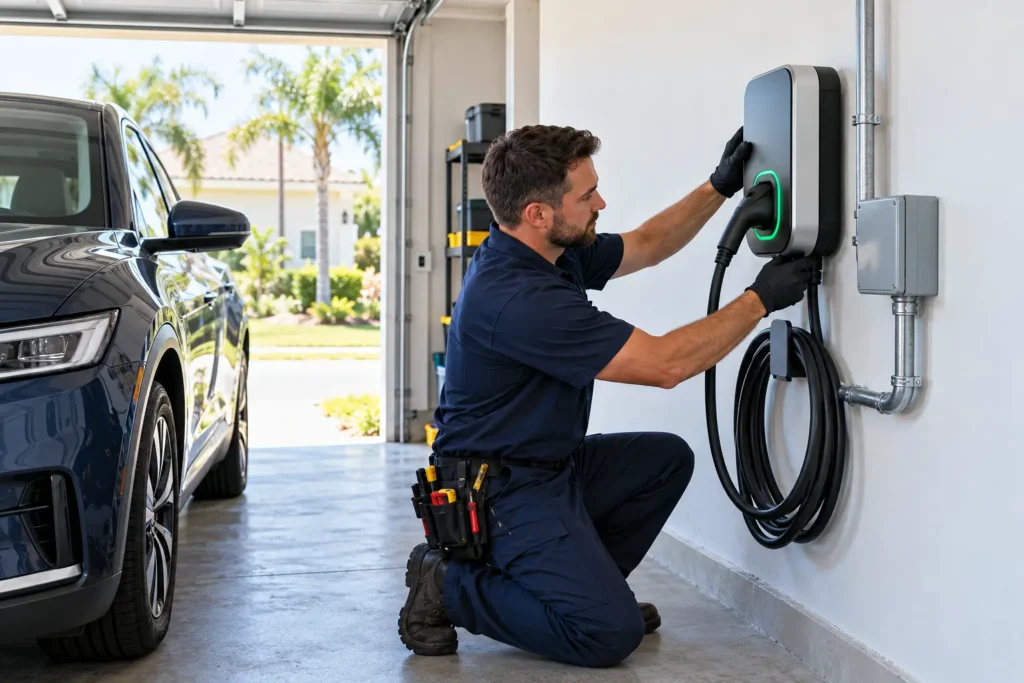
A professional EV charging assessment considers the vehicle, electrical capacity, cable reach, location and permitting requirements.
Level 1 vs. Level 2 Home Charging
Level 1 charging typically uses a standard household receptacle and delivers energy slowly. It may be adequate for drivers with limited daily mileage or long periods between trips. Level 2 charging uses a higher-voltage dedicated circuit and generally provides substantially faster charging.
The right choice depends on the vehicle, commute, available charging time and property. Charger ratings also vary, so installation should be designed for the selected equipment instead of using a one-size-fits-all assumption.
Step 1: Evaluate Electrical Capacity
A licensed electrician should review the service and panel before specifying the circuit. The assessment may include panel rating and condition, existing loads, available breaker spaces, conductor path and the charger’s electrical requirements.
An empty breaker space does not automatically mean capacity is available. A proper load calculation helps determine whether the existing service can support the charger or whether additional work is necessary.
Step 2: Choose the Charger Location
The location affects cable reach, daily convenience, installation complexity and exposure to weather or physical damage. Think about how the vehicle parks today and whether a second EV or different charging-port position may matter later.
Indoor and outdoor installations require equipment suited to the environment. The cable should reach comfortably without creating a trip hazard or being stretched across a traffic area.
Step 3: Hardwired or Plug-In?
Some Level 2 chargers are hardwired, while others connect through a compatible receptacle. Each approach has design and equipment considerations. Charger instructions, circuit rating, local requirements and installation environment all influence the decision.
A plug does not eliminate the need for a correctly designed dedicated circuit and suitable electrical equipment.
Step 4: Permits and Inspection
Requirements vary by jurisdiction, but EV charger projects commonly involve electrical permitting and inspection. A licensed contractor can coordinate the applicable process and complete the installation according to current code and manufacturer instructions.
Permitting is part of documenting that concealed and visible work was reviewed, not an optional inconvenience to bypass.
Step 5: Commissioning and Homeowner Orientation
After installation, the electrician should verify operation and explain basic use, cable management and shutdown procedures. Network-connected chargers may also require app setup, but electrical commissioning should not depend only on an app saying the charger is online.
Will You Need an Electrical Panel Upgrade?
Not every EV charger installation requires a new panel. The answer depends on service capacity, current loads, charger output and project design. Some properties have adequate capacity, while others need an upgrade or a professionally designed load-management strategy.
OM Power Services provides both licensed electrical work and residential and commercial EV charging solutions, allowing the complete project to be evaluated by one team.
Planning for a Second EV
If another electric vehicle is likely, discuss it before the first installation. Conduit routing, panel planning, charger selection and load management may be approached differently when future charging is part of the plan.
Commercial properties, multifamily communities, hotels and fleets require additional planning for multiple charging ports, user access, demand and maintenance.
What Determines Home Charging Speed?
Charging speed depends on the vehicle’s onboard charging capability, charger output, circuit design, battery condition and charging settings. Installing the highest-output unit available does not guarantee that every vehicle will accept power at that rate.
Share the exact vehicle model and charger specifications with the electrician. If you expect to change vehicles, discuss whether the circuit and equipment should be sized for a reasonable future need.
What Affects Installation Cost?
The distance from the panel to the parking location, routing difficulty, wall construction, conductor size, charger type, permits and panel work all influence cost. An installation on the wall beside a suitable panel is different from a long route through finished areas or to a detached structure.
An on-site assessment allows the contractor to identify these conditions and prepare a clearer scope. Extremely low quotes may omit permitting, suitable materials or work needed to complete the project correctly.
Outdoor and Multifamily Installations
Outdoor chargers must be listed and installed for the environment, with attention to mounting, weather exposure, cable storage and physical protection. Multifamily projects introduce questions about assigned parking, common electrical infrastructure, billing, access and future expansion.
Property managers should plan beyond a single charger. A readiness study can identify capacity, practical locations, preliminary infrastructure needs and a phased approach.
Protecting Charging Equipment in Florida
Discuss surge protection and manufacturer recommendations as part of the electrical design. Unplugging the vehicle or switching equipment during severe weather should follow the charger and vehicle instructions; homeowners should not improvise procedures around energized equipment.
Keep the connector off the floor, inspect the cable for damage and stop using the charger if it shows heat damage, repeated faults or physical deterioration. Service should be performed by qualified professionals.
Commercial EV Charging as a Property Upgrade
For apartments, hotels, offices, retail sites and fleets, charging can support residents, guests, employees or operations. Commercial planning must address demand, charger quantity, networking, access, payment strategy where applicable and ongoing support.
OM Power Services offers EV readiness assessments that review existing electrical capacity, potential charger locations, preliminary infrastructure, permitting considerations and budget planning before installation.
Questions to Ask Your EV Charger Installer
Ask what charger output is appropriate for the vehicle and service, whether the proposal includes permitting and inspection, and how the circuit will be routed and protected. Confirm whether the unit will be hardwired or plug-in and who is responsible for charger setup and commissioning.
If a panel upgrade is proposed, ask how the load calculation supports that recommendation and whether other future loads were considered.
Daily Use and Basic Maintenance
Follow the charger and vehicle manufacturer’s instructions. Store the cable so it is not driven over, pinched or exposed to standing water. Periodically look for physical damage, looseness, discoloration or unusual heat around the connector and equipment.
If charging stops repeatedly, do not keep resetting breakers or opening electrical equipment. Record any fault indication and contact the installer or a qualified service professional.
Why Turnkey Installation Is Valuable
A coordinated provider can evaluate the panel, design the circuit, obtain applicable permits, install the equipment and verify operation. This reduces gaps between charger selection and electrical work and gives the property owner one team responsible for the complete scope.
OM Power Services combines licensed electrical expertise with residential and commercial charging experience, from individual garages to multifamily and fleet planning across Florida.
Frequently Asked Questions
How long does Level 2 charger installation take?
Project time varies with panel location, circuit route, permitting, charger type and whether electrical upgrades are needed. An on-site assessment provides a more accurate scope.
Can any electrician install an EV charger?
Choose a properly licensed and insured electrical contractor with experience evaluating capacity, permitting and EV charging equipment.
Does OM Power Services install commercial chargers?
Yes. OM Power Services handles residential chargers and commercial charging solutions for communities, hotels, offices and fleets. Call (754) 271-1130 or schedule an EV readiness assessment.